
instanceof运算符原理及在JS继承判断中的应用
深入解析JavaScript中instanceof运算符的底层执行原理、原型链向上查找算法、手写模拟实现,以及在多层类继承、实例类型检测中的实际应用与边界注意事项。
JavaScript 中判断一个实例是否归属于某个构造函数或类体系时,instanceof 是最常用的二元运算符。其核心判断机制非常明确:检测右侧构造函数的 prototype 属性所指向的原型对象,是否存在于左侧实例对象的原型链(__proto__)上。只要在整条链路遍历结束遇到 null 之前匹配成功,运算便返回 true,否则返回 false。本文将从执行机制剖析、算法步骤推导、手动模拟实现,到面向对象类继承关系的实际检验与边界陷阱进行完整解答。
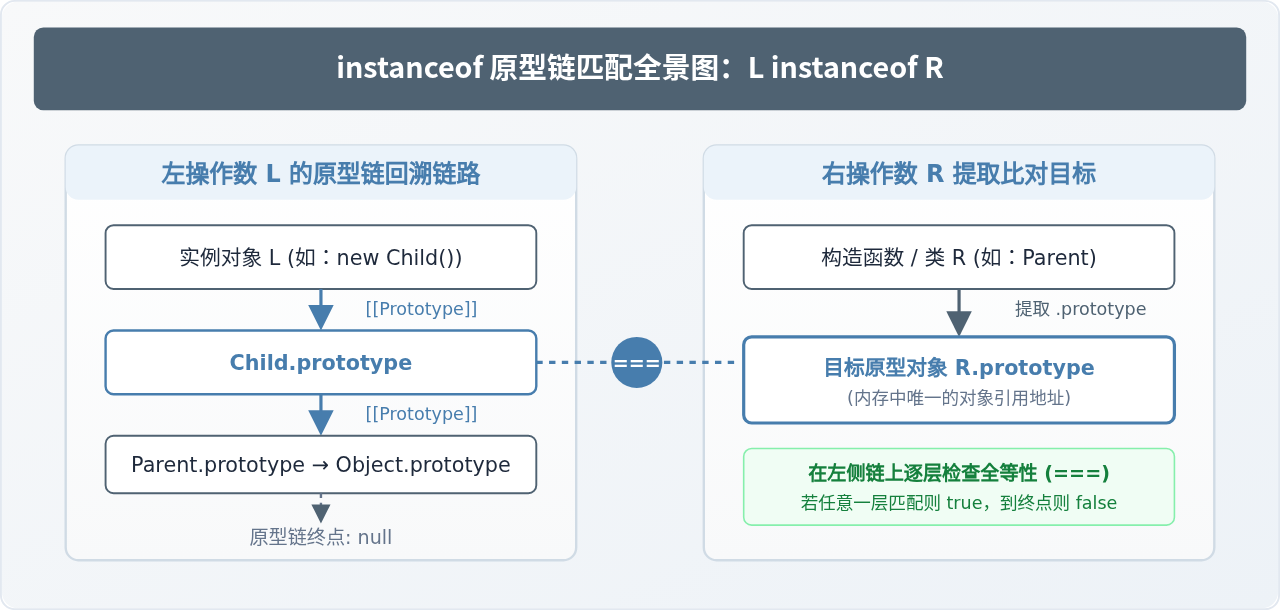
一、instanceof 的底层运作原理与规范推导
在 ECMAScript 规范中,执行表达式 L instanceof R 会经历以下标准化判定流程:
- 右操作数校验:首先检查右操作数
R是否为对象(包括函数)。如果不是对象,或者右侧没有构造原型属性,立即抛出TypeError: Right-hand side of 'instanceof' is not callable/an object。 - 优先调用 Symbol.hasInstance:ES6 之后,规范规定优先检查
R[Symbol.hasInstance]方法是否存在。若存在该方法,则直接调用该方法并将左侧实例作为参数传入,即执行R[Symbol.hasInstance](L),并将其布尔返回值作为计算结果。 - 常规原型链检索算法:若未自定义
Symbol.hasInstance,则读取R.prototype。若左操作数L为原始数据类型(例如number、string、boolean、symbol、bigint等非对象),直接返回false。 - 循环遍历左侧原型:通过底层抽象方法
Object.getPrototypeOf(L)读取左侧对象的隐式原型。若得到null,说明原型链已到尽头仍未匹配,返回false;若当前原型对象全等于R.prototype,说明命中继承关系,直接返回true;否则继续向上回溯。
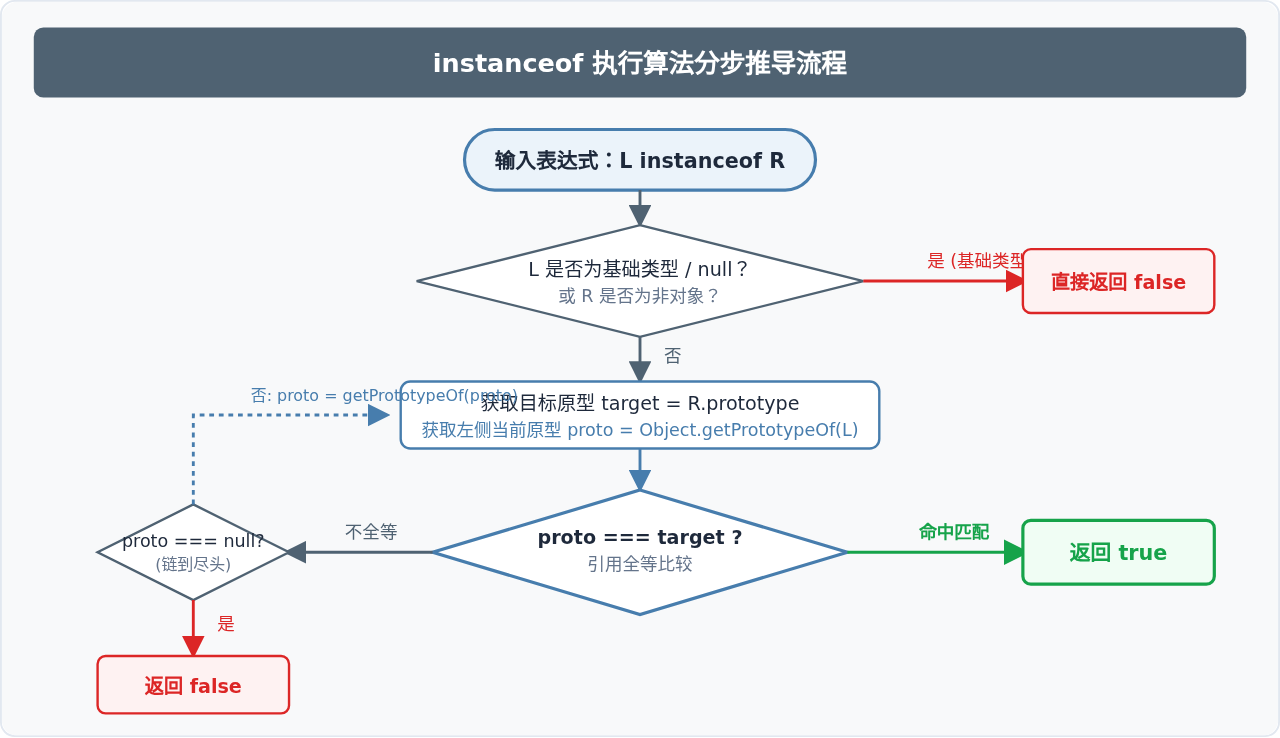
二、原生 instanceof 的代码模拟实现
为了直观掌握其内部机制,可以通过标准 JavaScript 代码模拟实现一个 myInstanceof 函数。该函数完整复刻了原型链遍历逻辑:
/**
 * 模拟原生 instanceof 运算符
 * @param {any} left 左操作数(实例对象)
 * @param {Function|Object} right 右操作数(构造函数或包含 prototype 的对象)
 * @returns {boolean}
 */
function myInstanceof(left, right) {
  // 1. 基础边界校验:若右侧不是对象或函数,抛出类型错误
  if (right === null || (typeof right !== 'object' && typeof right !== 'function')) {
    throw new TypeError("Right-hand side of 'instanceof' is not an object");
  }

  // 2. 右侧必须拥有 prototype 属性(例如箭头函数没有 prototype)
  const targetPrototype = right.prototype;
  if (!targetPrototype) {
    throw new TypeError("Function has non-object prototype in instanceof check");
  }

  // 3. 基础数据类型或者 null/undefined 直接返回 false
  if (left === null || (typeof left !== 'object' && typeof left !== 'function')) {
    return false;
  }

  // 4. 获取左侧对象的原型对象
  let currentProto = Object.getPrototypeOf(left);

  // 5. 沿着原型链逐步向上搜索,直到尽头 null
  while (currentProto !== null) {
    if (currentProto === targetPrototype) {
      return true; // 命中目标原型,属于该构造函数或其祖先类的实例
    }
    // 递归获取上一级原型
    currentProto = Object.getPrototypeOf(currentProto);
  }

  return false; // 原型链走到底部仍未匹配
}

// 基础验证示例
class Animal {}
class Dog extends Animal {}

const dog = new Dog();

console.log(myInstanceof(dog, Dog));     // 输出示例:true
console.log(myInstanceof(dog, Animal));  // 输出示例:true
console.log(myInstanceof(dog, Object));  // 输出示例:true
console.log(myInstanceof(dog, Array));   // 输出示例:false
console.log(myInstanceof("hello", String)); // 输出示例:false(基础字面量)
三、在 JavaScript 继承体系判断中的实际应用
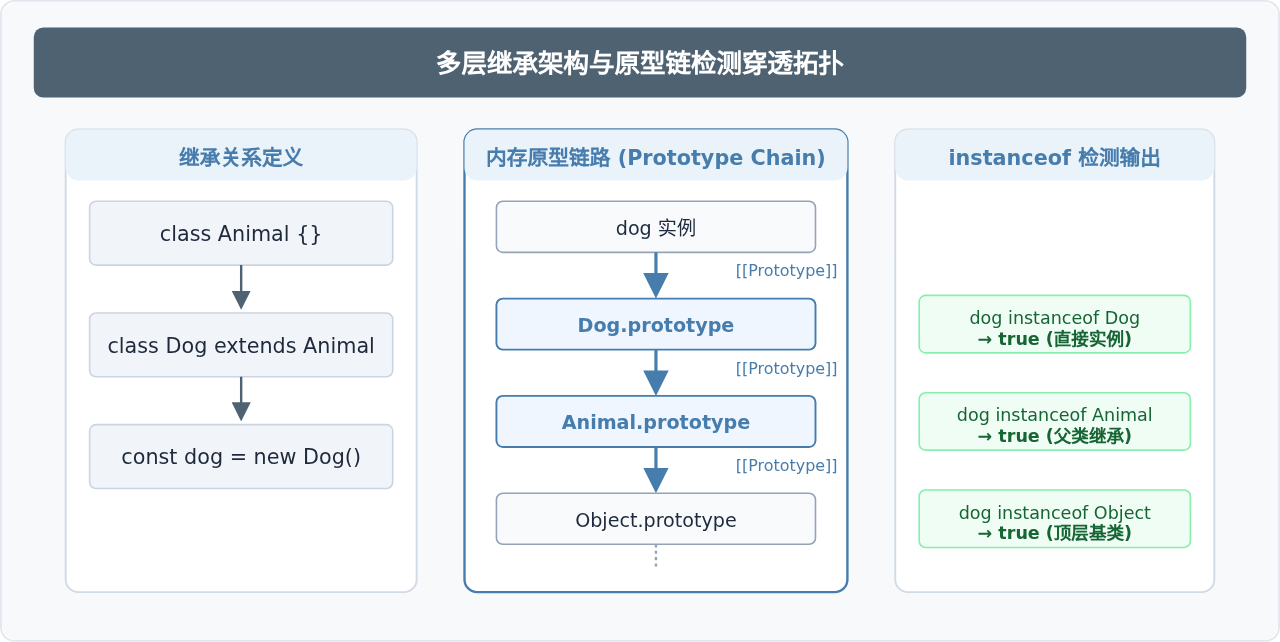
在面对对象编程中,instanceof 是检验对象多态性、类继承拓扑关系的核心工具。与单纯判断“由谁直接生成”不同,instanceof 具有继承穿透性。
1. ES6 Class 继承链路的层级穿透判定
在 ES6 继承中,通过 extends 关键字建立的派生类,其原型链满足:子类实例.__proto__ === 子类.prototype,而 子类.prototype.__proto__ === 父类.prototype。因此,子类实例不仅是子类的实例,也是其所有父类及 Object 的实例。
2. 防御性类型保护与多态分支处理
在工程业务代码中,instanceof 最多用于参数类型收窄(Type Narrowing)和多态异常捕获。例如在统一错误处理或事件分发管道中:
function handleCustomError(error) {
  if (error instanceof ValidationError) {
    // 捕获并处理表单校验相关的特定业务错误
    console.warn("表单校验失败:", error.field, error.message);
  } else if (error instanceof NetworkError) {
    // 捕获网络超时或断网状态
    console.error("网络请求异常,启动重试机制:", error.statusCode);
  } else if (error instanceof Error) {
    // 兜底捕获标准运行时异常
    console.error("未捕获的通用错误:", error.stack);
  } else {
    // 针对非 Error 派生类型的异常抛出防御处理
    console.error("未知类型异常:", error);
  }
}
四、instanceof 的局限性与常见陷阱
尽管 instanceof 在处理继承关系时非常顺手,但在特定应用场景下存在严重限制,如果不清楚其成立条件容易引发静默 Bug。
1. 跨窗口/跨 Realm(如 iframe)导致的判断失效
JavaScript 运行时的每一个窗口或环境(如 <iframe>、Worker、不同网页上下文)都有独立的全局执行环境。也就是说,父窗口的 Array.prototype 和子窗口 iframe 的 Array.prototype 在内存中是两个完全不同的对象引用。
// 假设从 iframe 内部获取了一个数组
const iframe = document.createElement('iframe');
document.body.appendChild(iframe);
const iframeArray = iframe.contentWindow.Array;

const list = new iframeArray(1, 2, 3);

console.log(list instanceof Array); // 输出示例:false!
// 原因:list 的原型是 iframe 中的 Array.prototype,而比对的是当前主窗口的 Array.prototypeArray.isArray(list) 或 Object.prototype.toString.call(list),这两个方法基于内部标签 [[Class]],能安全跨越多 window 环境。
2. 基础数据类型的字面量检测盲区
基础字面量没有原型链绑定,因此 instanceof 会直接返回 false。只有使用对应构造函数 new 出来的包装对象,运算才会返回 true:
const strLiteral = "hello world";
const strObject = new String("hello world");

console.log(typeof strLiteral); // "string"
console.log(strLiteral instanceof String); // false (字面量没有原型链查找)

console.log(typeof strObject); // "object"
console.log(strObject instanceof String);  // true (存在显式原型链接)
3. ES6 Symbol.hasInstance 的拦截与重写
ES6 允许开发者在类或对象上自定义 [Symbol.hasInstance] 方法,这使得 instanceof 的判断规则可以被完全自定义甚至反转:
class CustomEvenChecker {
  static [Symbol.hasInstance](instance) {
    return typeof instance === 'number' && instance % 2 === 0;
  }
}

console.log(2 instanceof CustomEvenChecker); // 输出示例:true
console.log(3 instanceof CustomEvenChecker); // 输出示例:false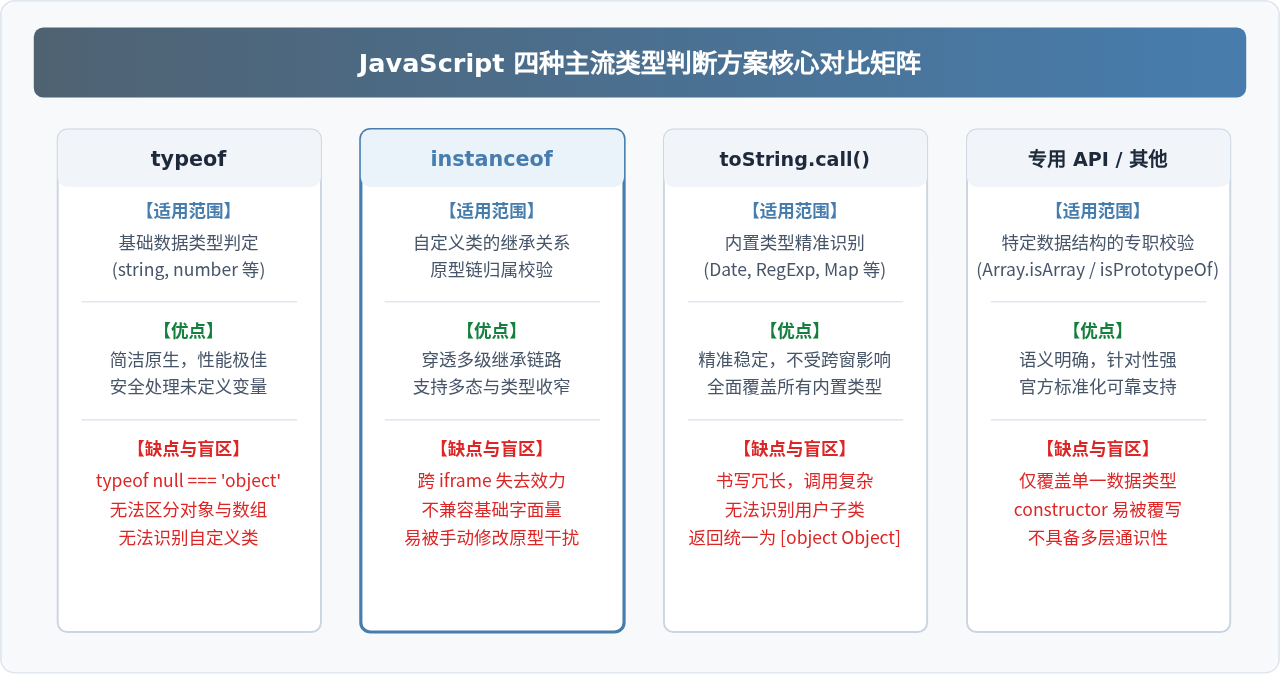
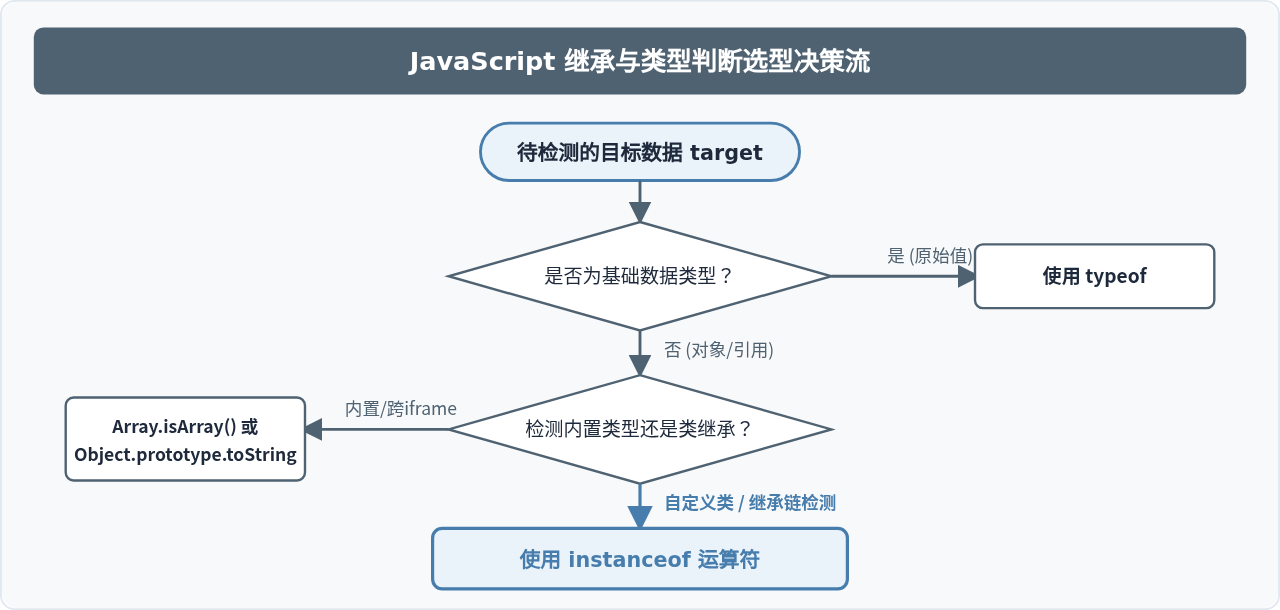
五、工程实践总结与判断选型决策指南
为了在实际开发中高效、无误地选择合适的操作手段,可以依据以下规则进行分类决策:
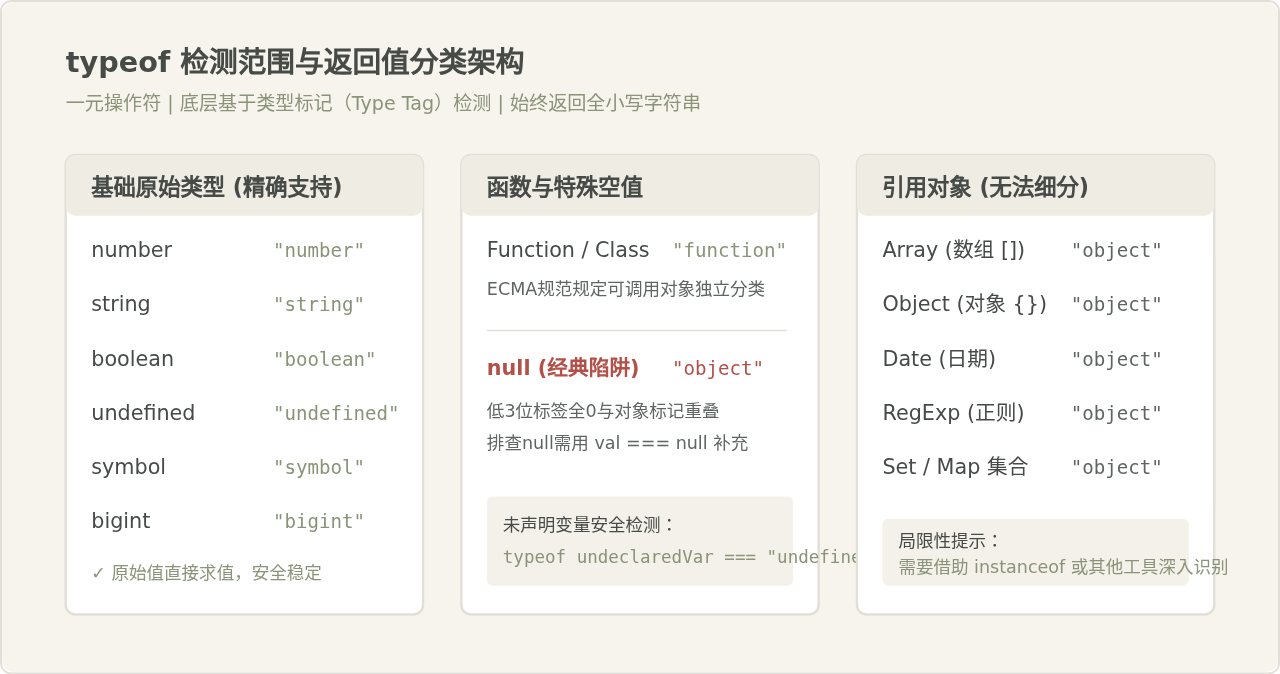
- 判断原始值类型:优先使用
typeof(如判断是否为string、number、boolean、function等)。 - 判断内置复合类型:数组直接使用
Array.isArray(),日期、正则或跨 iframe 场景使用Object.prototype.toString.call()。 - 面向对象继承关系或错误捕获:直接使用
instanceof,利用其沿原型链向上检索的特性校验实例是否属于某个类及其祖先类。
JS动态构建复杂嵌套JSON对象的方法
2026-11-05 15:41:52
JS负数取余为什么是负数?详解余数与模运算区别
2026-11-05 13:34:41
JS 解压出现乱码或报错怎么解决?
2026-11-05 12:32:38
JS 中 startsWith、indexOf 与正则判断字符串前缀的对比
2026-11-04 22:19:43
JS解析Excel后怎么将数据转换为JSON格式
2026-11-04 20:58:28
相关标签: